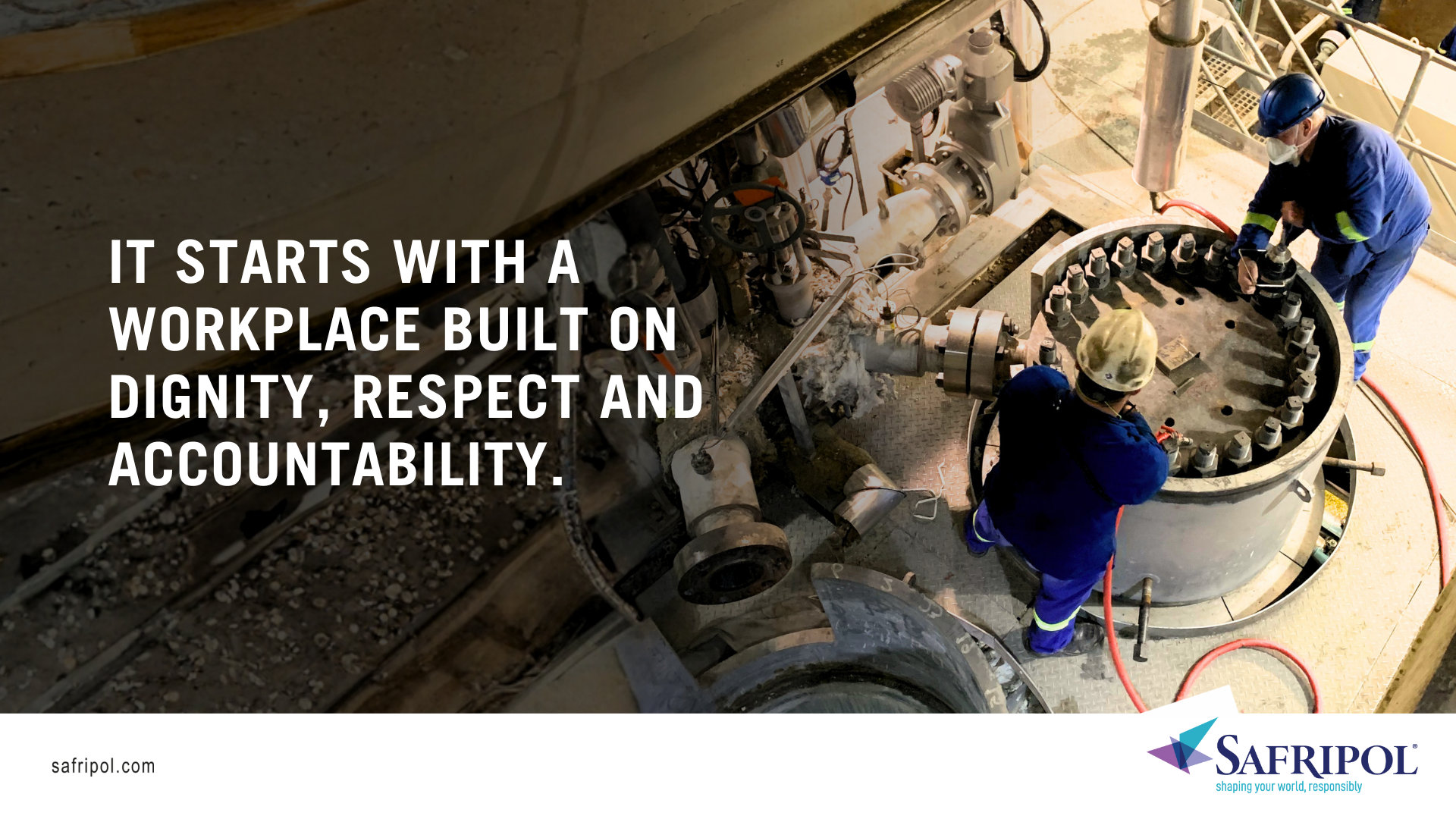
Safripol’s approach to human rights is to create an inclusive and supportive environment free of prejudice in which all employees are treated equally with respect and dignity. We endeavour to enable a conducive and enabling environment for employees to realise their maximum potential within the company, regardless of their age, race, gender, religious or other beliefs.
We comply with the provisions of the Basic Conditions of Employment Act (No. 75 of 1997) and other labour laws, which prohibit forced and child labour, regulate hours of work, overtime work and employee leave, amongst others. We prohibit discrimination in the workplace and take positive measures to affirm and advance Historically Disadvantaged South Africans (HDSA) in all levels of the company. We also focus on building productive working relationships across diverse groups based on trust and respect.
Safripol strongly condemns any type of workplace harassment as a form of unfair discrimination. Through Safripol’s annual harassment policy employee declarations, we promote awareness about workplace harassment, and its prevention. Safripol employees and directors are also expected to uphold the highest ethical standards, demonstrate consistency in their ethical conduct and live the Safripol values as set out in the Business Code of Conduct through their everyday actions.
Safripol’s ethical compliance is supported by KAPREF, an anonymous, confidential ethics hotline which is available 24 hours a day, seven days a week, to all employees, suppliers and other stakeholders, who can report illegal or unethical behaviour, including mismanagement of funds, discrimination, harassment, vandalism, corruption, violence and theft without fear of reprisal. KAPREF Hotline activities are reported to KAP’s sustainability, social and ethics committee, the audit and risk committee and the KAP board.
FAQs
Q1: How does Safripol uphold human rights and comply with labour laws?
A1: Safripol creates an inclusive, prejudice-free environment to enable all employees to realise their potential. The company complies with the Basic Conditions of Employment Act and other labour laws, which prohibit forced and child labour and regulate working conditions.
Q2: What specific measures does Safripol take regarding discrimination and diversity?
A2: Safripol prohibits discrimination in the workplace, focuses on building productive working relationships across diverse groups, and takes positive measures to affirm and advance Historically Disadvantaged South Africans (HDSA) in all levels of the company.
Q3: How does Safripol address workplace harassment and ensure ethical standards?
A3: Safripol strongly condemns all types of workplace harassment (unfair discrimination) and promotes awareness through annual harassment policy employee declarations. Employees and directors are expected to uphold the highest ethical standards and live the Safripol values as set out in the Business Code of Conduct.
Q4: How does Safripol handle illegal or unethical behaviour?
A4: Ethical compliance is supported by KAPREF, an anonymous, confidential ethics hotline available 24/7 to all employees, suppliers, and stakeholders to report illegal or unethical behaviour without fear of reprisal.
Q5: What types of issues can be reported via the KAPREF Hotline?
A5: Issues that can be reported include mismanagement of funds, discrimination, harassment, vandalism, corruption, violence, and theft. KAPREF activities are reported to the KAP board and its relevant committees.
Safripol’s Labour and Human Rights: See How Our Core Values Drive Action. Download the Sustainability Report