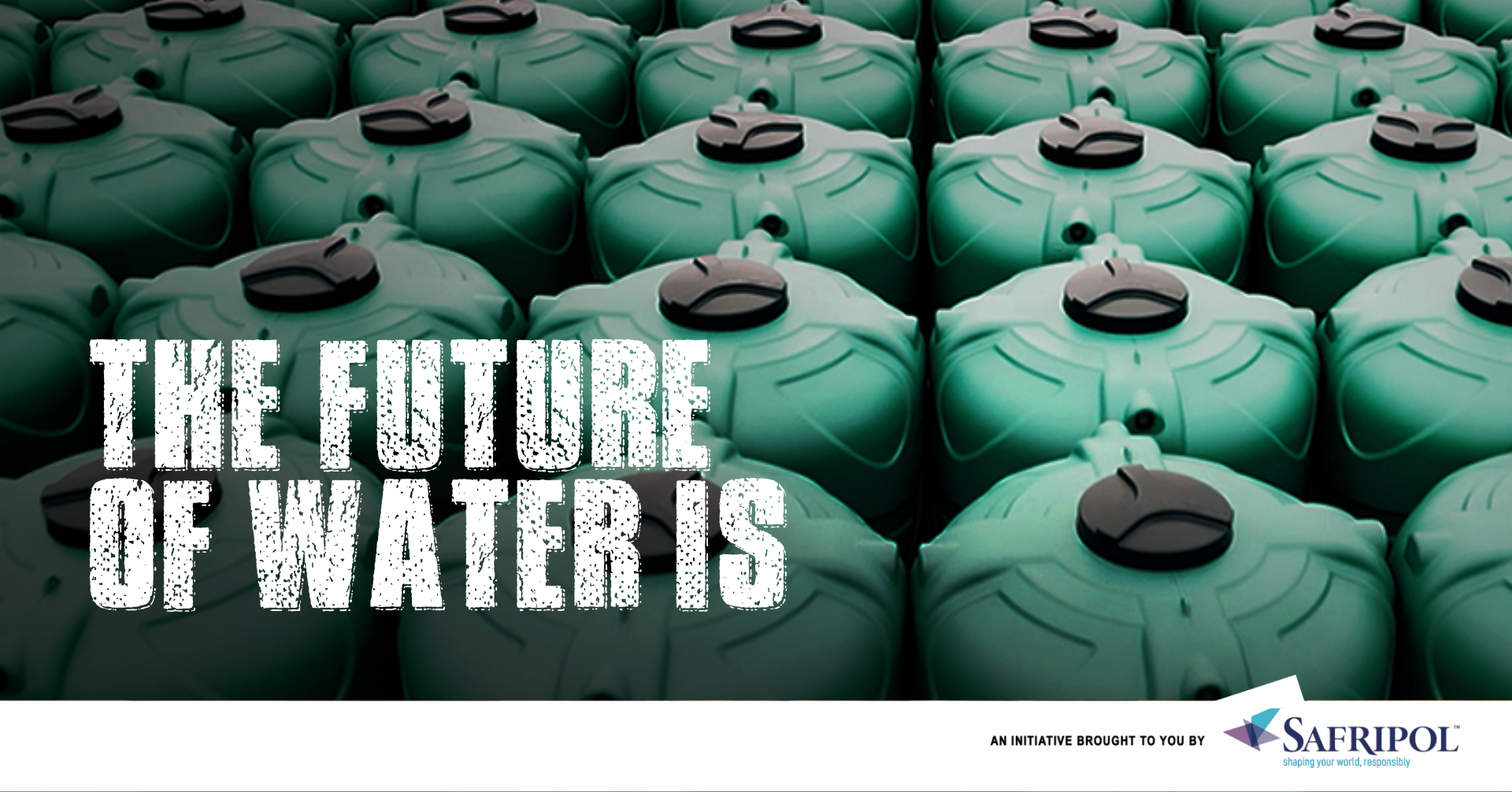
That’s the goal. A United Nations target that South Africa readily endorses. The question is whether it is achievable.
In the Safripol Future of Water podcast series, Nithaam Bawa from Gift of the Givers and Kurt Schovell, Head of HR at Safripol, explored the social impact of water and the human story behind South Africa’s need to be ‘water resilient’. The podcast aims to raise awareness and motivate action toward solutions, but where does the country stand right now?
While there has been much improvement, the most recent statistics indicate that 68% of South Africans have access to clean water and 74% to good sanitation. 71% of our monitored water is rated as good quality.
There’s a lot of work to do.
The Social Cost of Water
Numbers don’t tell the story of what it’s like for people on the ground. To live in an environment where water is a luxury.
When water scarcity is mentioned, it is understandable that many of us think of ‘being thirsty’. But the impact of lack of water is far more profound.
It affects human dignity, health, education, food production and the very fabric of daily lives.
While urban and peri-urban areas may face health issues from sewage contamination in water supplies, rural villages face the prospect of travelling long distances to collect water from ponds shared with livestock and wildlife. In both circumstances, bacteria can cause all manner of infections, unsightly rashes, sickness, and even death.
Education also suffers. Dehydrated or hungry students can’t learn properly. In South Africa, rural schools are closing early because there is simply no water for the children and no effective sanitation. The next generation compromised by the lack of a basic human need.
Lack of water in rural areas also means lack of food. Communities depend on a water supply to grow their own food and look after their animals. When that self-sufficiency breaks down the village goes hungry.
There are serious obstacles to achieving clean water and sanitation for all.
But there are ways forward.
Let’s look at the problem differently. Dams are just big water storage facilities. What if we built smaller dams?
Thousands of them.
Water Tanks.
Water Tanks Can Be Our Lifeline
Craig Forbes, Director at Africa Tanks, discussed solutions with Michael Avery in the Future of Water Safripol podcast series, looking specifically at the value of water storage.
As many as 3 million South Africans remain without access to clean drinking water. Most of these people live in rural areas with limited infrastructure.
Yet, through the efforts of organisations such as Gift of the Givers, manufacturers such as Africa Tanks, and sponsors such as Safripol, projects have been able to alleviate this ‘water poverty’ in specific areas. Boreholes, rain harvesting, and above all, water tanks, have provided durable, decentralised storage.
This is an understanding we can action nationally to mitigate the water crisis.
Plastic Technology that can Save Our Water
To be an effective means of water storage, water tanks need to go beyond simple rain-harvesting receptacles. They need to be lightweight so that they are easily transportable.
They need to be cost-effective.
They need to be leak-proof, long-lasting and safe for drinking water.
Africa Tanks uses an innovative blow-moulding process, with prices affordable for stokvels, schools, small businesses or simply three or four households collaborating.
Safripol supplies High-Density Polyethlene (HDPE) resin for the manufacture of the water tanks, ensuring they are leak-resistant, non-toxic, and food-compliant.
The three-layer moulded structure gives the tanks a lifespan of 15 to 20 years.
It was these tanks that Safripol, Africa Tanks, and Gift of the Givers employed to provide safe water storage for 1.25 million litres of water following the 2022 KZN floods emergency.
Demand in rural areas is understandably high, but there has been a noticeable uptake of water tank usage in urban areas as water supply becomes more erratic. Some shopping malls have installed units to create ‘water resilience’ for times when the municipal supply is compromised.
Partnerships are the Way Forward
South Africa needs partnerships between government, business and NGOs to move from crisis response to long-term, community-owned solutions.
The scale of the water issue is simply too great for government or any single entity to sustainably address it on its own. Yet a proven model already exists where NGOs implement solutions on the ground with backing from private enterprise.
As an example, Gift of the Givers and Safripol have partnered, both with each other and with third parties to achieve results across the country.
In Cwebeni Village near Port St Johns in the Eastern Cape, there was no access to running water for seven years. A muddy spring provided their only supply, and the health of villagers was deteriorating. Gift of the Givers responded to pleas for help and, after conducting a survey began drilling with funding from Bonitas. Eventually, they struck groundwater 120 meters down. The village of 100 or so families now has a solar-powered borehole with standpipes and fencing.
In Umlazi, near Safripol’s Durban plant, 40 educational institutions stopped teaching at 11 AM due to a lack of sanitation or drinking water, undermining education. Safripol partnered with Africa Tanks to install water tanks, enabling full days and happy, attentive students.
These are just a couple of examples of the many water-related projects that Gift of the Givers, Safripol and others have been involved with.
Now imagine what could be achieved if we multiplied those projects through collaboration with more and more like-minded companies and institutions.
Watch Nithaam Bawa from Gift of the Givers and Kurt Schovell, Head of HR at Safripol, in conversation with Michael Avery here.
Watch Craig Forbes, Director at Africa Tanks, discuss solutions with Michael Avery in the Future of Water Safripol podcast series.