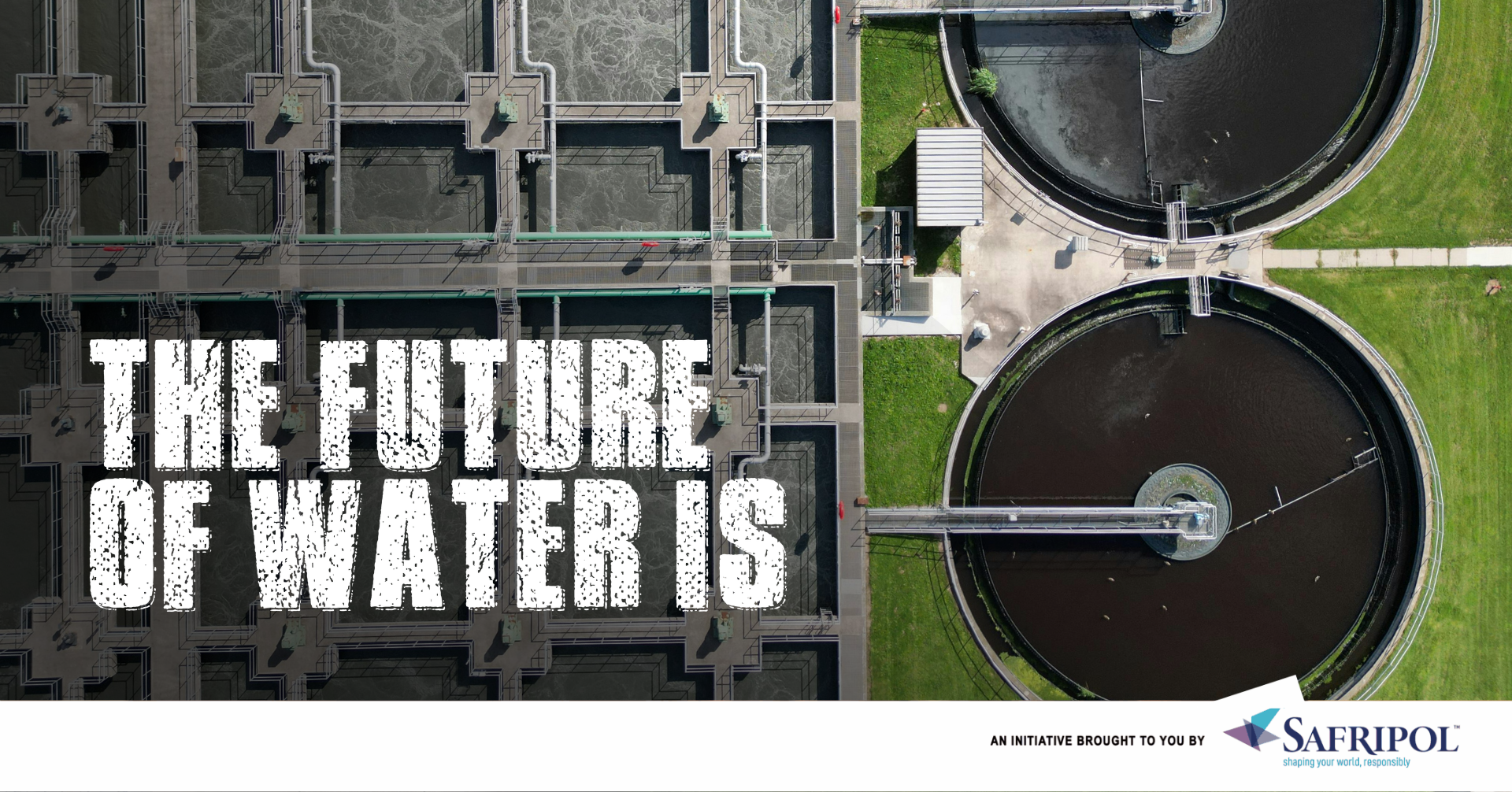
Globally, water scarcity has reached crisis level. South Africa is no exception. Current predictions are that we will experience a gap between water supply and demand of 17% by 2030.
Despite good rainfall in parts of the country, rainfall is seasonal, and in reality, South Africa has consistently ranked among the 30 countries in the world with the highest water scarcity.
Demand is rising. And infrastructure is strained.
Safripol created the Water Security Engagement Forum Podcast series as a way to engage with leading experts in different sectors, with the aim of better understanding the issues and advocating for solutions.
In the very first episode, Dr Sean Phillips, Director-General in the Department of Water and Sanitation, outlined some of the key issues and highlights targeted reforms through institutional changes, emphasising financial sustainability and accountability.
Understanding the Key Issues
We have already captured 75% of our available surface water in dams, and our population is increasing, as are the demands of industry and agriculture.
South Africa’s per capita consumption is high at between 218 to 237 litres a day, compared to a global average of 173 litres.
Municipal water infrastructure needs to be replaced to prevent water loss.
Ambitious government initiatives, such as Phase 2 of the Lesotho Highlands Water Project and the Umkhomazi Water Project, will eventually alleviate pressure on demand, but dam building can only achieve so much. With costs prohibitive, public-private partnerships are needed.
Planning the Way to Water Security
Non-revenue water, water that is supplied but effectively lost to illegal connections or leakage, has reached a national average of 50%. Government has acted to rectify the situation with regulatory changes.
Dr Philips explained that implementing phase 2 of Operation Vulindlela ( the government’s initiative to modernise national networks), and amendments to the Water Services Act will see strict ring-fencing of revenue from water sales so that it is only used for maintenance and the better operation of the infrastructure. This will address the loss of water from leakage and ensure regulated responsibility.
At the same time, the National Treasury’s grant system will reward and incentivize councils for optimising revenue, fixing leaks and responding to illegal connections.
New credit control measures will safeguard funds, ensuring current users fund the system while curbing losses in high non-revenue water areas.
New regulatory amendments will also make it easier for private enterprises to become involved in water storage or maintenance initiatives. The Department of Water and Sanitation is increasing support for public-private partnerships, for example, partnering with mining houses on projects like the R 24 billion Olifants Management Model (OMM) in Limpopo.
Better Maintenance of Infrastructure
Dr Phillips advocates that with the looming crisis, municipalities should allocate 8% of their budgets to maintenance capital expenditure. Currently, it can be as low as 1% in places like Gauteng metros.
While issues of planning, funding, regulations, and staff skill levels are being addressed, the most effective intervention at the water supply level right now is the steady replacement of our pressure pipes.
How Plastic Can Help Us Save Water
In another episode of the Safripol podcast series, Anton Hanekom, Executive Director of Plastics SA, and Avashnee Chetty, Sustainability Manager at Safripol, looked at ways plastic technology can be a part of the solution.
Our municipal water supply infrastructure is severely compromised. Old concrete pipes are corroded, and maintenance is costly. Nearly half of all the treated water that municipalities supply is simply lost.
The infrastructure is damaged. But not beyond repair.
In the supply of drinking water and in sewage, plastic pressure pipe technology is demonstrating the way that we can end water loss. Safripol’s unique HDPE resin is cost-effective, locally produced, resistant to earth movement and can last from 50 to 100 years. Critically, its leak-resistance leads to massive reductions in possible water loss. The same sealed piping also helps to prevent contamination.
The opportunity is to replace municipal pipes with this piping and end the cycle of water loss and supply disruption.
How Plastic is Helping to Feed Us
It takes a lot of water to grow the food we need to produce to feed a nation of over 60 million people. Agriculture accounts for 60% of South Africa’s total consumption.
And it is in agriculture that plastic technology is revolutionising water efficiency, using less water to grow more food, and better-quality food.
Precision Irrigation with HDPE Drip Systems can lead to massive savings in water and better yields. With pipes and emitters delivering water directly to the roots, there is no evaporation and no ‘runoff’.
Plastic shade netting reduces the evaporation of soil moisture by up to 30%. The retention of soil moisture, particularly in dry spells, reduces the need for additional irrigation.
Mulch films greatly reduce the level of evaporation, decreasing the frequency of irrigation and conserving water. This, combined with mulch films’ capability of controlling soil temperature, often leads to healthier plants and optimal growth.
Changing our attitude to Water
While these reforms can achieve results for our water supply, our focus shouldn’t be distracted from our levels of consumption.
While the government addresses supply issues, we need to collectively, as ordinary people, as private enterprises, as public servants, be more alert to how much water we waste and what opportunities exist to be more water efficient.
Water security is achievable if we take action on and in the ground.
You can watch the podcast with Dr Sean Phillips here. You can watch the podcast with Anton Hanekom and Avashnee Chetty here.